How to Prepare for Any Meeting in 60 Seconds Using AI
Most professionals walk into back-to-back meetings with zero prep time. A focused 60-second AI routine changes that — surfacing attendee context, open questions, and likely objections before you even say hello.
You have three minutes between your demo call and the next one-on-one. Maybe two, once you've found the right tab. That's the reality for most managers, sales reps, and consultants: back-to-back schedules with no buffer and no time to think before the next conversation starts.
Walking in blind has real costs. You miss the chance to acknowledge something the other person mentioned last time. You ask a question already answered in an email you didn't read. The first five minutes become orientation instead of progress. AI changes that, not by doing the meeting for you, but by compressing prep into a time slot that actually exists.
What Unprepared Actually Costs You
It's not just awkward. Unprepared meetings fail in specific, predictable ways. You start slow while small talk fills the space your brain needs to load context. The other person can feel it, especially in sales, where the opening sets the tone for everything that follows.
You also miss live questions. Issues that could have been resolved in the meeting turn into follow-up email chains that stretch across days. One resolved question in 30 minutes beats three back-and-forths over a week. That latency accumulates across every deal, every project, every relationship you're managing.
Then there's the context you didn't know you were missing. The attendee you assumed was a junior stakeholder was promoted two months ago and now owns the budget. The project you were about to reference was quietly deprioritized. Five minutes of prep would have told you both of those things. Walking in blind means finding out mid-sentence.
The 60-Second Pre-Meeting AI Routine
Before you hit Join, you should know: who's in the room, what was last discussed, what's on the agenda, and what questions are likely to come up. An AI can surface all of that in under a minute if you give it the right inputs. Here's the routine.
- Paste the meeting invite. Drop the invite (title, attendees, agenda) into your AI and ask what this meeting is probably about and what outcome the organizer likely wants. Even a bare-bones invite tells you something.
- Pull last-meeting context. Paste key points or a summary from the previous conversation. Ask the AI to flag unresolved items and any commitments you made. "What did I say I'd follow up on?" is one of the most useful prompts you can run.
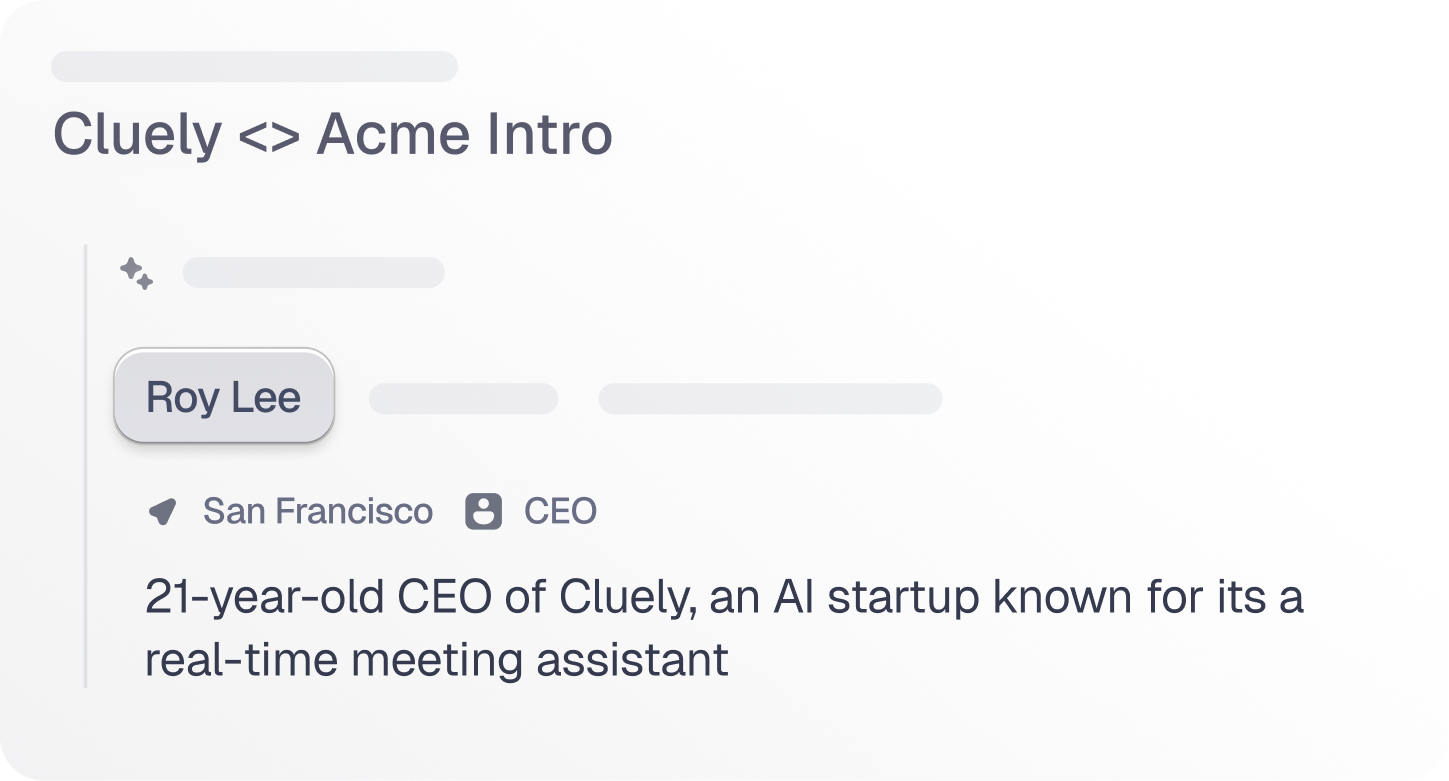
- Check attendee context. For external meetings, paste the person's role or LinkedIn headline. Ask the AI what they probably care about, what objections they're likely to raise, and what you should lead with. For internal meetings, describe their current project and how your agenda affects them.
- Anticipate the hard question. Ask: "What's the toughest question someone in this meeting might ask me?" Then decide how you'd answer it. You don't need a script — a beat of mental prep is enough so you're not caught mid-thought when it lands.
When AI Stays On During the Meeting
Prep is the start. Live AI assistance is what covers the gap when the conversation goes somewhere unexpected.
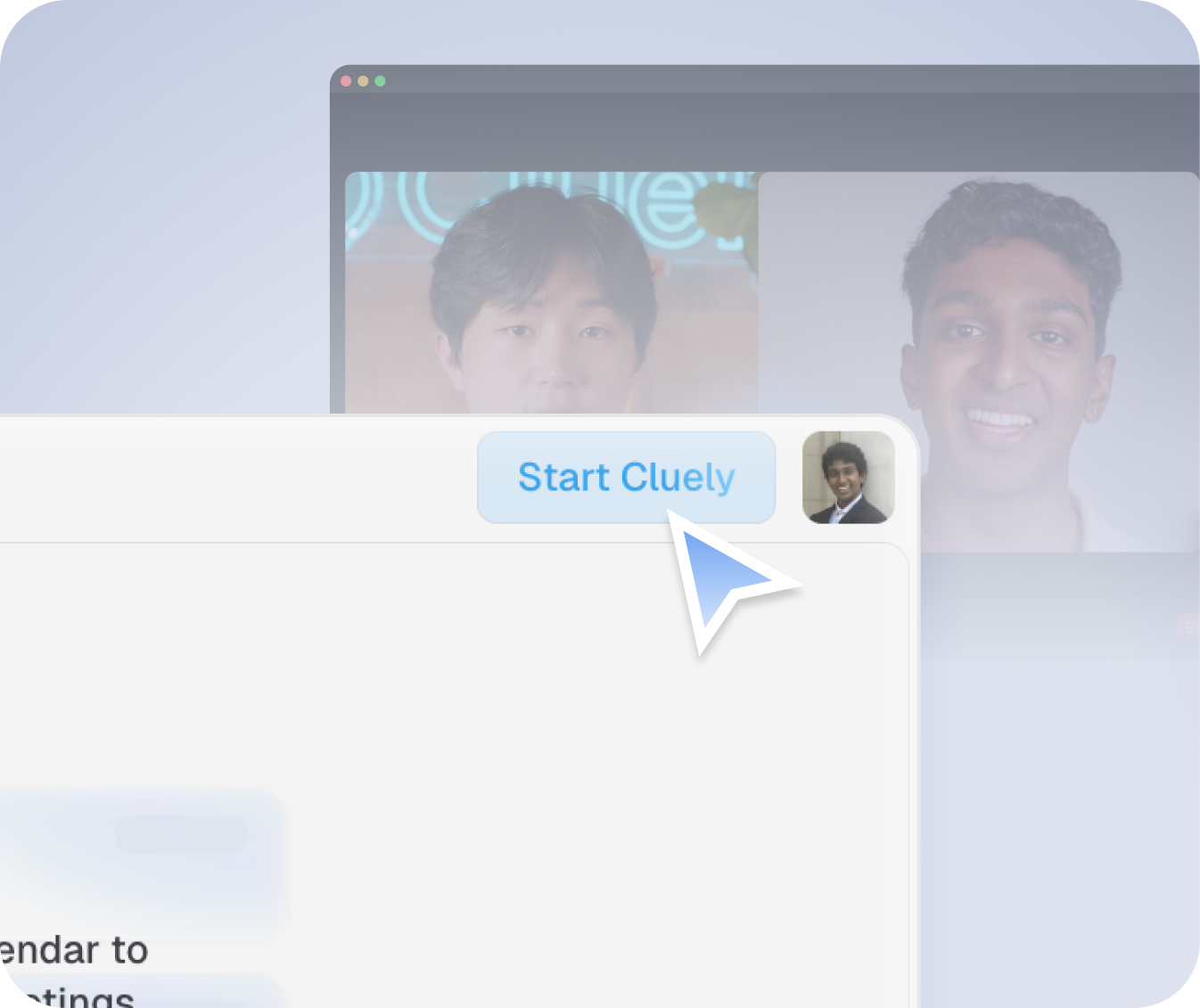
Tools like Cluely work in the background while you're on a call. They surface relevant context in real time: a stat you wanted to check, a follow-up item from the last meeting, a competitor the other person just brought up. You don't have to tab out or type a search. The information appears alongside what's being discussed.
This matters most in three situations: when a new objection comes up that you didn't anticipate, when someone asks for a specific number you don't have memorized, and when the conversation shifts to a topic adjacent to the agenda. In all three cases, a live AI lets you respond without the pause that signals you're out of your depth.
The combination of 60-second prep before and live assistance during turns a reactive conversation into a controlled one. You're not always ahead — but you're rarely behind.
The Prompt Template: What to Ask Your AI Before You Join
Copy this before your next meeting and fill in the bracketed sections. It works with Cluely, ChatGPT, Claude, or any AI you already use.
Meeting: [Title or short description]
Attendees: [Names and roles]
Agenda: [What's on the agenda, or your best guess]
Previous context: [Key points from the last conversation, or "first meeting"]

Give me:
1. The likely goal of this meeting from the organizer's perspective
2. Any open items or commitments from our last conversation
3. What this person (or these people) probably care about most right now
4. The hardest question I might get asked, and a one-sentence answer
The response takes about 15 seconds to generate. The rest of your minute goes toward reading it. That's the whole routine.
The hard part isn't the prep itself. It's breaking the habit of jumping straight from one meeting to the next with no breath in between. Sixty seconds is genuinely enough to change how a conversation starts, and more often than not, how it ends.